

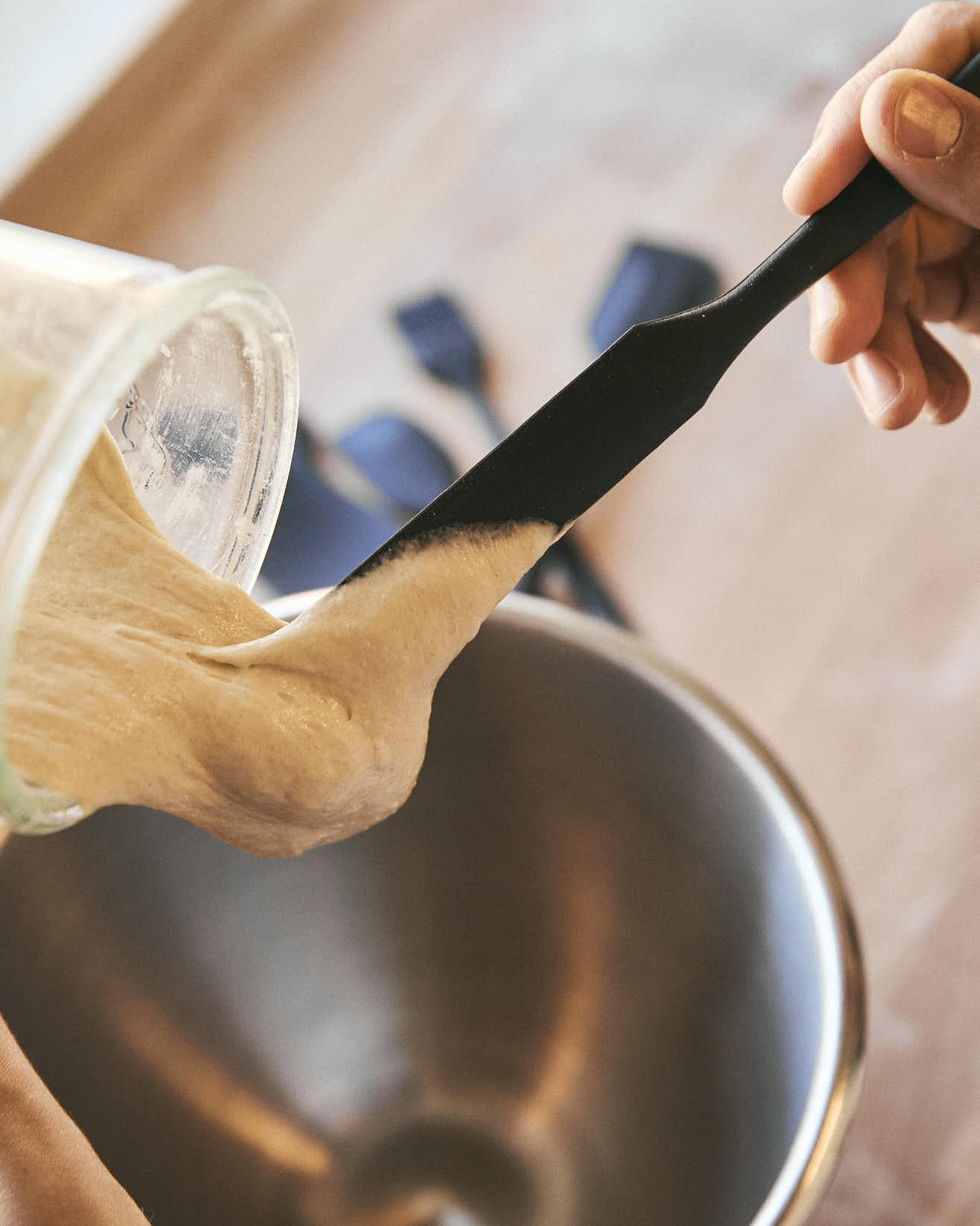
If you feed your sourdough starter regularly, you always have discard. Most people throw it away. Here's why you shouldn't.
Sourdough crispbread is one of the easiest things you can bake — no kneading, no shaping, no proving. Mix, spread, bake. The result is thin, crunchy, seed-packed crispbread with a deep, slightly sour flavour that shop-bought versions can't come close to.
It also keeps for two weeks in an airtight container. Make a big batch on a Sunday and you're set for the week.
What is Sourdough Discard?
Every time you feed your starter, you remove a portion before adding fresh flour and water. That removed portion is the discard. It's still full of wild yeast and bacteria — it's just not at peak activity. For baking bread, it's too weak. For crispbread, crackers, waffles and pancakes, it's perfect.
Using discard is also simply good practice. Nothing goes to waste.
Ingredients
- 200g sourdough starter discard (unfed, straight from the fridge is fine)
- 100g rye flour
- 50g rolled oats
- 120g mixed seeds — sesame, sunflower, flax and pumpkin all work well
- 1 tsp salt
- 2 tbsp olive oil
- 2–4 tbsp water (add gradually — the batter should be thick and spreadable)
This makes 2 large trays of crispbread — roughly 30–40 pieces depending on how you cut them.
Method
Preheat your oven to 170°C fan.
Mix all ingredients together in a bowl until combined. The mixture should be thick enough to hold its shape but soft enough to spread — add water a tablespoon at a time until you reach the right consistency. It should look like a very thick porridge.
Line two large baking trays with baking parchment. Divide the mixture between them and spread as thin as possible — aim for 2–3mm. The thinner, the crispier. A palette knife or the back of a wet spoon works well. Alternatively, place a second sheet of parchment on top and use a rolling pin to press it out evenly.
Score into rectangles or squares with a dough scraper before baking — this makes it much easier to break cleanly once baked. Don't cut all the way through, just score the surface.
Bake for 25–35 minutes until golden and completely dry to the touch. The edges will colour first — keep an eye on them. If the centre is still soft after 30 minutes, reduce the temperature to 150°C and give it another 10 minutes.
Remove from the oven and leave to cool completely on the tray. The crispbread will continue to crisp up as it cools.
Variations
The base recipe is very flexible:
- Herbs: Add a teaspoon of dried rosemary, thyme or caraway seeds
- Spice: A pinch of smoked paprika or cumin adds warmth
- Cheese: Fold in 30g of finely grated parmesan for a richer, savoury crispbread
- Sweet: Replace the salt with a tablespoon of honey and add a handful of dried fruit and nuts
Serving & Storage
Sourdough crispbread is excellent with cheese, smoked fish, hummus or just good butter. In Denmark, a classic combination is crispbread with cream cheese, cucumber and dill — simple and hard to improve on.
Store in an airtight tin or container at room temperature. Properly dried crispbread keeps well for up to two weeks — though in most households it disappears considerably faster.
If your crispbread softens after a few days (usually a sign it wasn't quite dry enough when it came out of the oven), put it back in a 150°C oven for 10 minutes to crisp it up again.
— Peter, Simpel Surdej
Share on socials:
Sourdough Rye Bread — The Danish Classic
Sourdough Rolls in a Stand Mixer — Easier Than You Think