

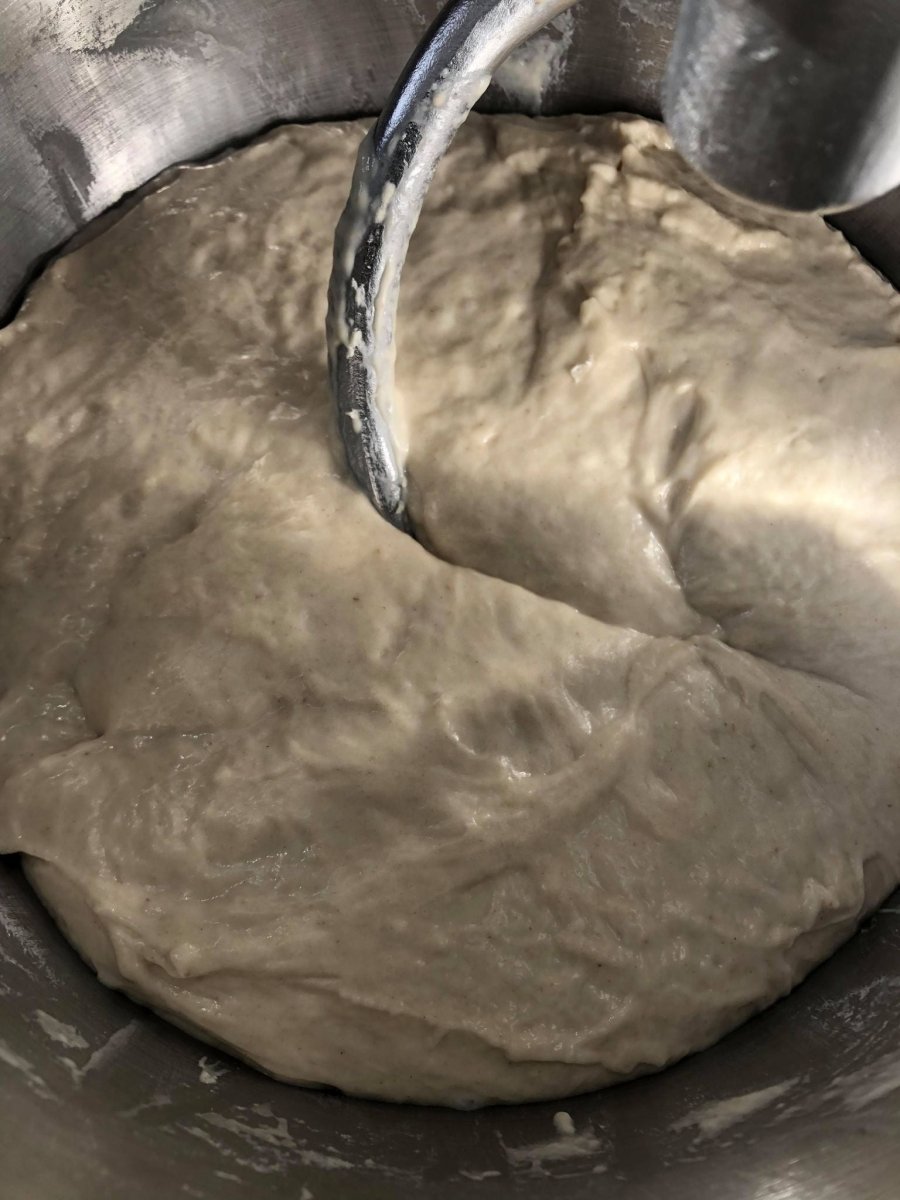
Autolyse sounds like something from a chemistry book. It is not. It is simply flour and water left to rest before you continue with the dough. It costs nothing but a little time, and it is one of the easiest ways to get a better dough and a better loaf.
Autolyse in 10 seconds
- You needOnly flour and water
- Rest30-60 minutes
- Water25-30°C
- Starter and saltAfter the rest
What is autolyse?
Autolyse means "self-digestion" in Greek. You mix flour and water and leave it alone. While it rests, the flour absorbs the water and gluten starts to form on its own, without kneading. When you come back to the dough, much of the work is already done.
The technique was made famous by the French baking professor Raymond Calvel, and today almost every artisan baker uses it. We use it in most of our wheat breads too.
How to do it
- Weigh flour and water for your recipe. Use water at 25-30°C.
- Mix them until there is no dry flour left. It takes about 2 minutes, and the dough can be shaggy.
- Cover the bowl and leave it at room temperature for 30-60 minutes.
- Add starter and salt and continue with the recipe as normal.
Hold back the salt. Salt tightens the gluten and slows down the enzymes. If the salt goes in too early, you lose much of the effect.

How long should the dough rest?
You can feel a difference after just 20 minutes. For most of our wheat doughs we use 30-60 minutes.
| Dough | Rest | Where |
|---|---|---|
| When you are busy | 20 minutes | Kitchen counter |
| Regular wheat dough | 30-60 minutes | Kitchen counter |
| High hydration or 30% whole grain and up | 1-2 hours | Kitchen counter |
| Overnight | 8-12 hours | Fridge |
Be careful with very long rests at room temperature. After more than 2 hours the gluten can get so slack that the dough is hard to shape. If the dough needs to rest longer, put it in the fridge.
Why does it work?
When flour and water meet, three things happen at the same time:
- Gluten forms on its own. The proteins in the flour bond into a gluten network without kneading. You need to knead much less afterwards.
- The dough gets supple. The enzyme protease loosens some of the gluten, so the dough pulls back less and is easier to stretch and shape. The acid from the sourdough makes protease even more active.
- Sugar is released. The enzyme amylase breaks starch down into sugar. The sugar feeds the sourdough and gives a better, browner crust in the oven.
There is one more benefit. When you knead for a shorter time, less air gets into the dough. Too much kneading in a stand mixer can make the dough pale and take away some of the flavour. With autolyse you avoid that.

Autolyse, fermentolyse or straight dough?
Fermentolyse is autolyse where the sourdough goes in from the start. Fermentation starts at once, and the acid makes the dough even more supple. We use it when we are short on time.
| Straight dough | Autolyse | Fermentolyse | |
|---|---|---|---|
| In the bowl from the start | Everything | Flour and water | Flour, water and starter |
| Kneading | Long | Short | Short |
| The dough | Tight | Supple | Very supple |
| Use it for | Rye bread and quick doughs | Most wheat breads | When you are busy |
Whole grain: where autolyse matters most
Whole grain flour and flour with a lot of bran absorbs water more slowly than sifted flour. The bran also acts like tiny knives that cut through the gluten network. A longer rest gives the bran time to soften before you start working the dough. If you bake with 30% whole grain or more, autolyse is not just a good idea. It is close to essential.
Common mistakes
- Adding the salt too early. Wait until the rest is over.
- The dough gets too warm in the mixer. If the dough goes above about 32°C while kneading, the gluten strands break and the dough turns sticky. If your mixer tends to heat the dough, start with colder water.
- Resting too long at room temperature. After 2 hours the dough can get too slack. Use the fridge for long rests.
- Forgetting that the bowl cools the water. A cold bowl takes heat from the water. Use water at the warm end of 25-30°C.

Try it in our recipes
All three recipes use autolyse and take you through every step:
- Sourdough bread in a proofing basket, our classic wheat loaf.
- Airy whole grain rolls with a crisp crust, where autolyse really makes a difference.
- Sourdough rolls in a stand mixer, if you want to knead as little as possible.
Frequently asked questions
Do I need to autolyse every time?
No. A loaf works without it. But autolyse makes a good loaf better, and for whole grain and high hydration we always recommend it.
Should the starter go into the autolyse?
Not in a classic autolyse. If the starter goes in from the start, it is called fermentolyse. That works too, but fermentation starts at once, so keep an eye on the time.
Can the dough rest overnight?
Yes, in the fridge. At room temperature the dough gets too slack after a couple of hours.
Does it work for rye bread?
Not much. Rye bread does not rely on gluten the way wheat bread does, so we skip the autolyse there.
Which flour should I use?
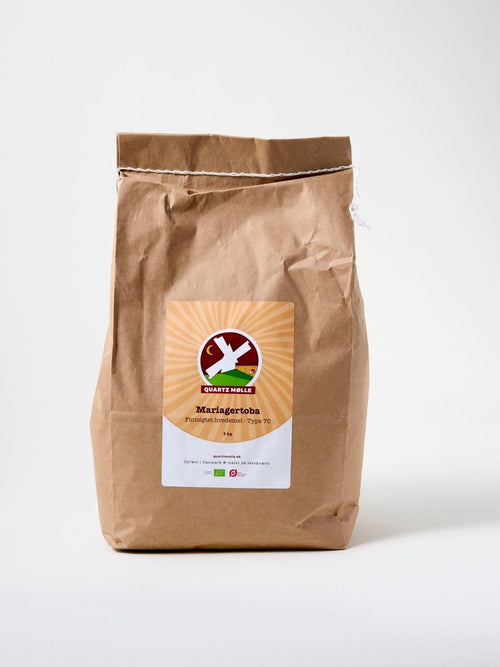
Any flour works, but a good bread flour with plenty of protein forms gluten more easily. We use organic flour from Quartz Mølle and Kornby Mølle.
Feel the difference in the dough. Taste the difference in the bread.
Peter, Simpel Surdej
Share on socials:
What is Sourdough
The Magic of Autolysis: A Simple Technique for Perfect Sourdough
1 comment
Du skriver om autolysen: “Dejen bliver mindre elastisk (den trækker sig mindre sammen) og bliver mere udvidelig. Dette skyldes, at melet bliver hydreret og muligvis fra den enzymatiske proces ‘protease’. Protease nedbryder blidt noget af det gluten, der dannes, når dejen hviler, og derfor bliver den mere smidig og lettere at strække”.
Der burde vel stå, at dejen bliver mere elastisk. Den bliver, som du også skriver mere smidig, udvidelig og mere elastisk :-)