

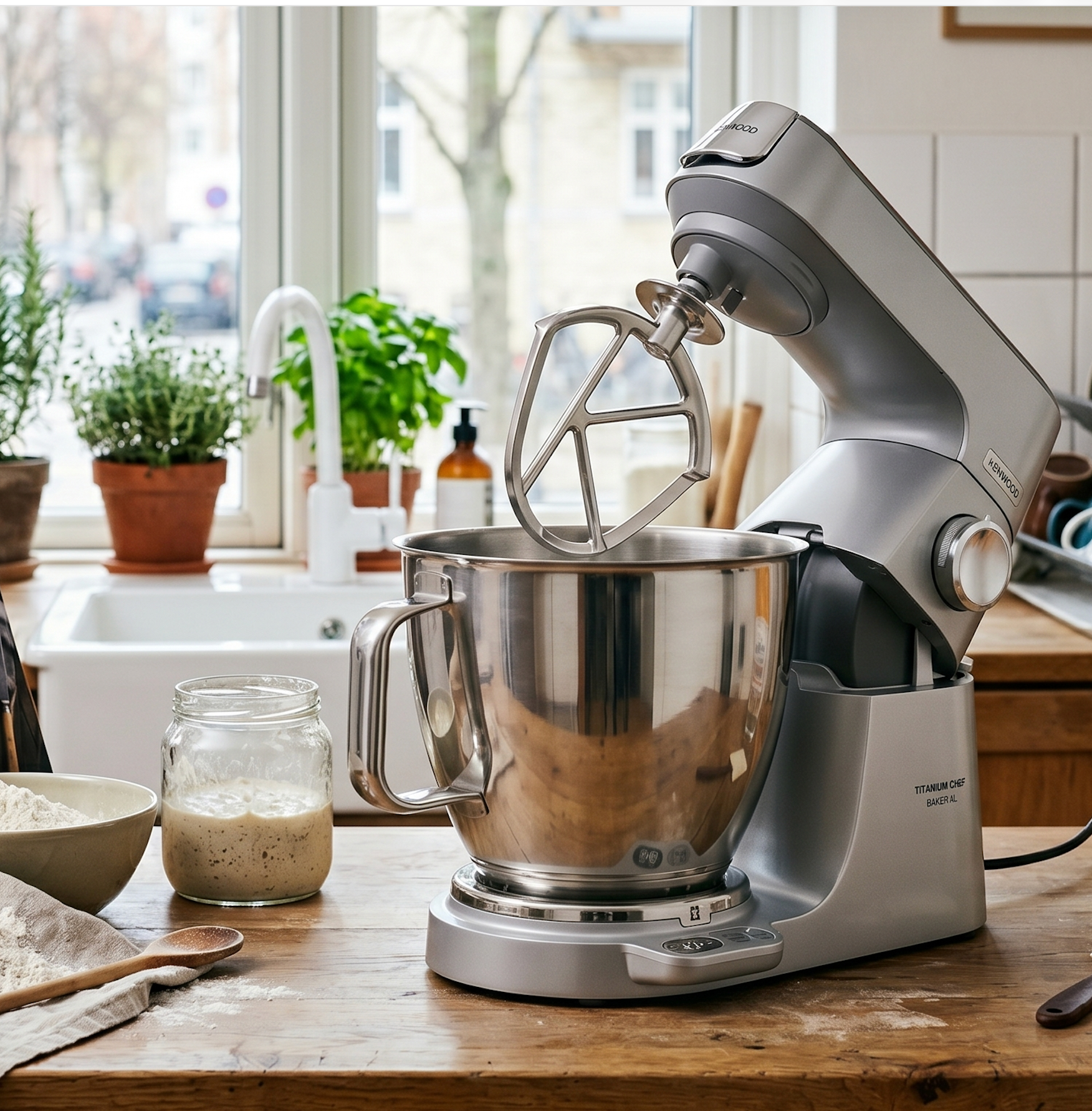
A stand mixer doesn't make sourdough easier — it makes it more consistent. You get the same result every time, with less effort and more control. For sourdough rolls in particular, it's a genuine upgrade.
This recipe is written specifically for a stand mixer, though everything works by hand too if you prefer.
Ingredients (12 rolls)
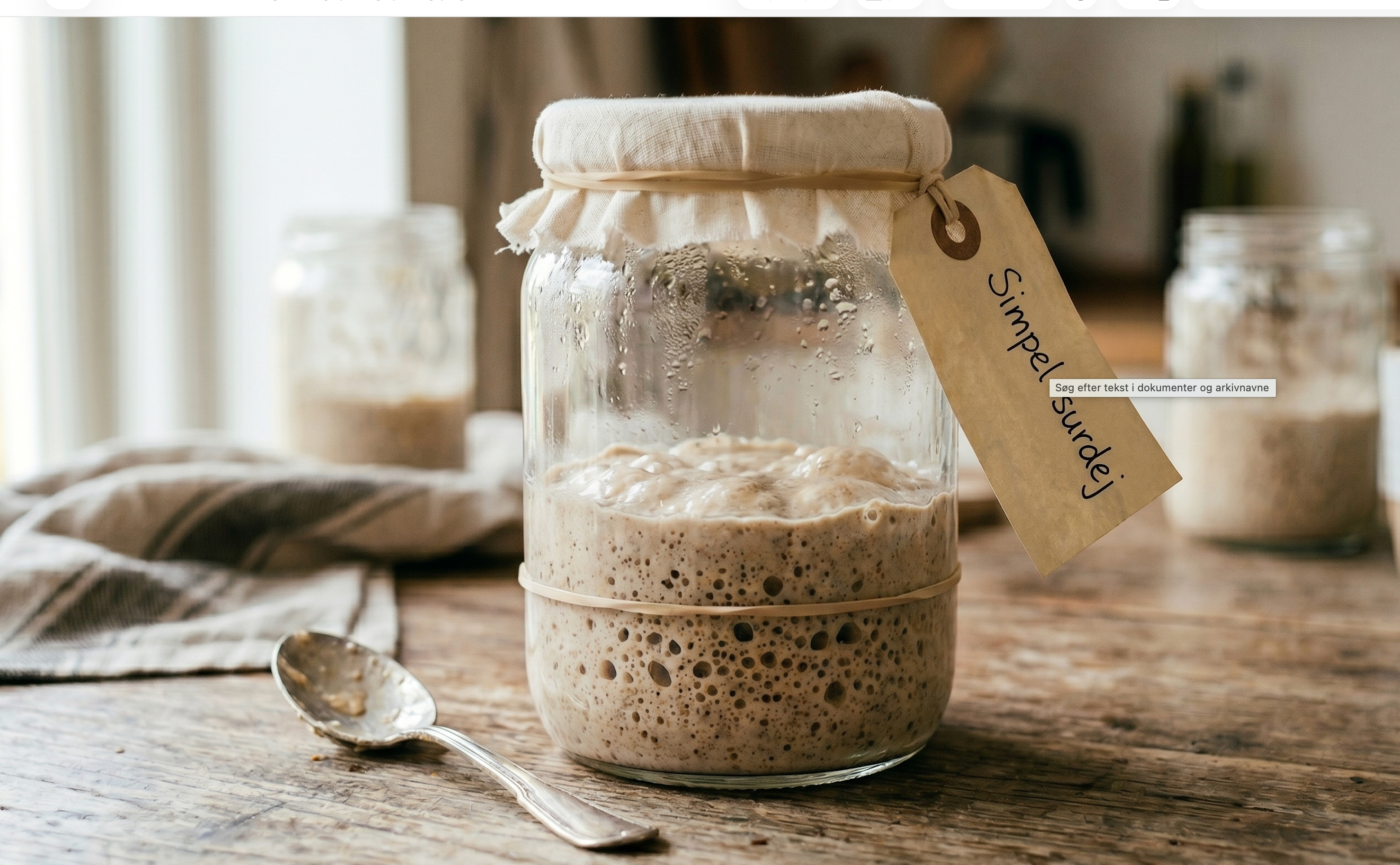
- 200g active sourdough starter (bubbly and at peak)
- 500g strong bread flour
- 300g water, room temperature
- 10g salt
- 20g honey
- 30g butter, softened and cut into small pieces
Method
Evening — Mix
Add the flour and water to the bowl of your stand mixer. Mix briefly on low with the dough hook until combined, then stop and leave to rest for 30 minutes (autolyse). Read more about why autolyse matters.
Add the starter, salt and honey. Mix on low for 2 minutes, then increase to medium (speed 4–6) for 5–6 minutes. The dough should pull cleanly away from the sides of the bowl and feel smooth and elastic.
With the machine running on low, add the butter piece by piece — wait for each piece to be fully incorporated before adding the next. Once all the butter is in, increase to medium-high for 2 minutes. The dough is ready when it passes the windowpane test: stretch a small piece thin enough to see light through without it tearing.
Cover the bowl and leave at room temperature for 2 hours, performing 3 sets of stretch-and-folds at 30-minute intervals.
Overnight — Cold Proof
Shape the dough into a ball, cover the bowl tightly and refrigerate overnight (8–16 hours).
Morning — Shape & Bake
Remove from the fridge and divide into 12 equal pieces with a dough scraper. Shape each into a tight ball and place on lined baking trays. Cover and proof at room temperature for 2–3 hours.
Preheat oven to 220°C fan. Score the tops with a bread lame and bake for 18–20 minutes until deep golden. Cool on a rack for 10 minutes before serving.
Stand Mixer Tips
- Don't skip the autolyse — it makes the dough come together much faster in the mixer
- Add butter last and slowly — adding it too fast prevents it from incorporating properly
- The windowpane test is your guide, not the clock — some flours take longer than others
- Don't over-mix after the butter is in — stop as soon as the dough is smooth
From here you can explore our full range of baking flours — small changes in flour make a big difference to the flavour and texture of your rolls.
— Peter, Simpel Surdej
In sozialen Netzwerken teilen:
Sourdough Crispbread — The Best Thing to Do With Discard